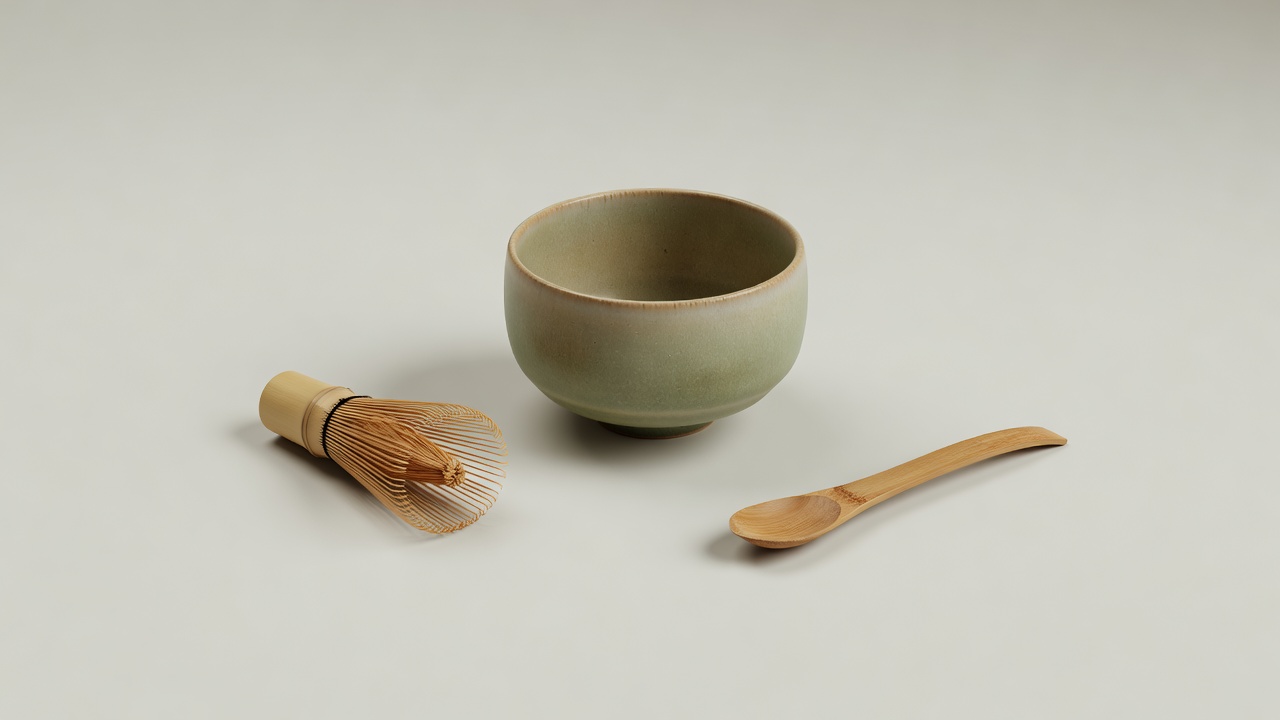
The collective term chadōgu refers to utensils associated with the way of tea. A complete inventory would extend far beyond the familiar bowl and whisk. Utensils support heating water, transferring it, preparing tea, serving food, displaying seasonal choices and receiving guests. Their roles overlap with craft, history and personal association, but the first distinction is practical: each has particular work to do.
Do not treat a photograph of a tea setting as a shopping list or an arrangement to copy. A selection belongs to an occasion, a room and a method of preparation. In lessons, your teacher can explain why one item has been chosen and how it should be handled. Here, the aim is to make those explanations easier to follow.
Chawan: the bowl that is received
A chawan is a tea bowl. Its shape affects how it rests in the hand, how the tea is mixed and how warmth is perceived. Notice the rim, the depth of the interior and the foot beneath it. A surface may look uneven while being carefully considered for use. Conversely, a visually attractive vessel is not automatically appropriate for hot tea or formal practice.
Raku ware, associated with Kyoto and the work of Chōjirō in the sixteenth century, is one important part of tea-bowl history, not a synonym for all tea ceramics. Other ceramic traditions offer very different surfaces and forms. Avoid identifying a kiln, maker or lineage from appearance alone. A collection record or reliable maker’s documentation is more useful than a confident visual guess.
A bowl may have an orientation explained by the host or teacher. How it is turned, presented and appreciated depends on context. If invited to examine it, keep it close to the floor or supporting surface and follow the host’s direction. You are receiving both a drink and responsibility for someone else’s object.
Chasen and chashaku: two kinds of bamboo work
Chasen
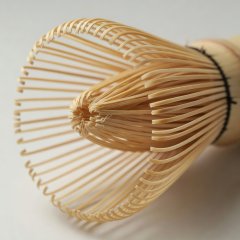
The divided bamboo tines mix matcha with water.
The chasen is a bamboo whisk, its working end divided into fine tines. It is not simply a miniature kitchen whisk: its shape and flexibility are suited to mixing powdered tea in a bowl. Different forms exist, and appearance alone does not tell you which school or preparation a whisk belongs to. The amount of surface foam is likewise not a universal score of quality.
The chashaku is a scoop used to transfer matcha. Bamboo examples are familiar, though other materials occur. A scoop can carry a maker’s history or a poetic name, but beginners should first recognize its function and delicacy. It is not a standardized measuring spoon. A teacher adjusts quantities to the tea, bowl, preparation and circumstances rather than relying on a universal scoop-to-water equation.
Containers, cloths and water
A natsume is a familiar form of container used for thin tea; chaire commonly refers to a ceramic tea container associated with thick-tea preparation. These introductory associations are useful, but neither term should become a rule for identifying every container in a photograph. Lids, coverings, shapes and handling belong to particular practices.
A mizusashi holds fresh water. A kama is the kettle, while a hishaku is a ladle used in many preparations. A kensui receives waste water. Recognizing these different roles helps a visitor understand movements that otherwise look repetitive: water is being selected, transferred or removed, not moved without purpose.
Cloths also have different functions. A chakin is used in wiping the bowl; a fukusa is a silk cloth used in formal handling and purification of certain utensils. Their folding and use are taught, not improvised from a decorative image. Symbolic purification within a procedure should not be confused with the separate practical work of washing and maintaining equipment.
Care begins with knowing the material
For your own equipment, ask the maker or teacher about care. Porous ceramics, lacquer, bamboo and silk do not share one cleaning method. Do not assume that a dishwasher, detergent soak or household disinfectant is suitable. Inspect a bowl for damage and a whisk for broken tines before use; stop using an item if its safety is uncertain.
Allow bamboo utensils to dry thoroughly with ventilation, and avoid storing them damp in closed packaging. The lesson is not that old objects must be preserved untouched. It is that use and care belong together. A modest, sound bowl used thoughtfully can teach more than an expensive object bought without understanding.
Sources and further observation
- Urasenke, English-language resources: school-specific introductions to the way of tea and its practice.
- Omotesenke, English-language resources: an additional lineage’s account of tea practice and utensils.
- The Metropolitan Museum of Art: collection records provide object-specific materials, dating and attribution; search for tea bowls and tea utensils.
- Sen Sōshitsu XV, The Japanese Way of Tea: From Its Origins in China to Sen Rikyū, University of Hawaiʻi Press, 1998. Historical context rather than a substitute for lessons.