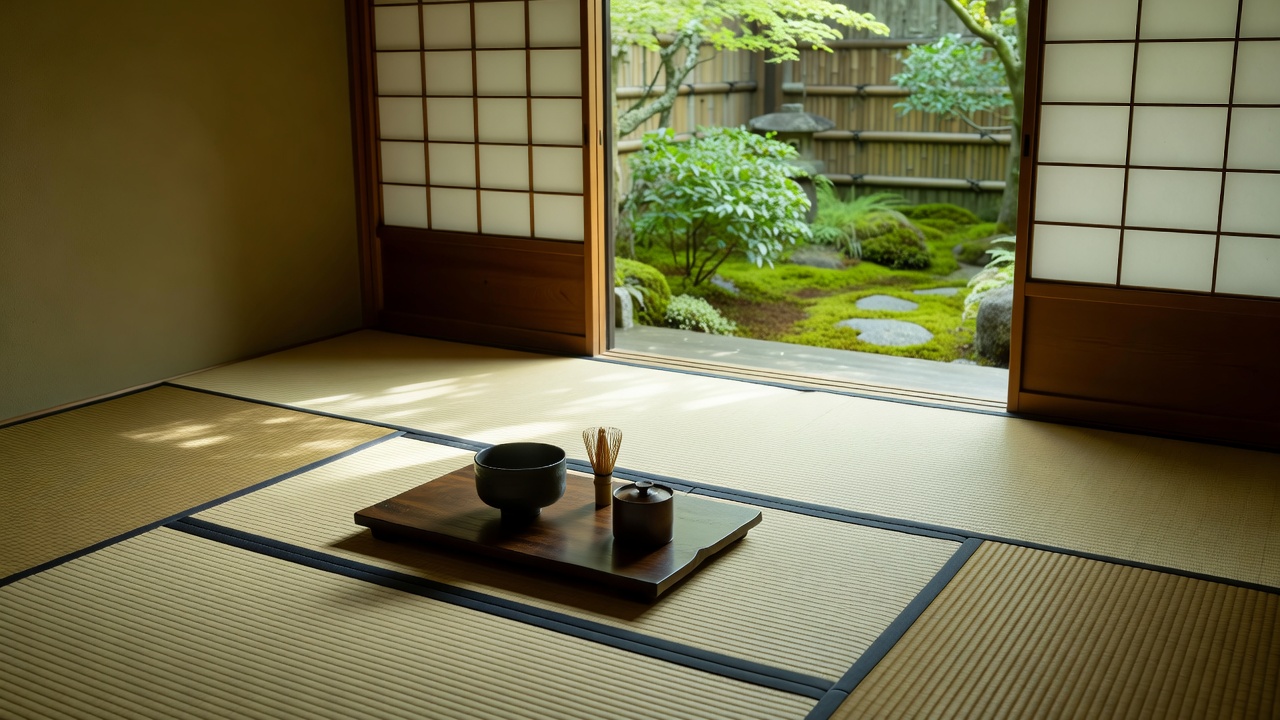
It is easy to turn a tea room into a visual formula: tatami, wood, a scroll and a flower. That formula misses the relationships that make a setting meaningful. Where guests sit affects their view of the host. The position of heat changes the feeling of the room. A single selected object can connect the gathering with weather, an anniversary or a shared memory.
The word chashitsu refers to a tea room, but tea is also practiced in larger rooms, adapted contemporary spaces and chair-based settings. A small rustic room is one influential architectural expression, not a requirement for every legitimate encounter. Learn to ask how a space is being used before judging whether it matches a familiar photograph.
The approach is part of the setting
A roji, the garden approach associated with a tea setting, can help mark a transition from everyday activity. Paths, gates, waiting places and a water basin may organize that transition. Their arrangement varies. What looks like an informal patch of stepping stones may be carefully planned around movement and maintenance.
Do not confuse a tea garden with every Japanese garden that appears quiet or spare. A dry-landscape garden and a roji have different histories and uses, even when they share materials. Likewise, a low entrance, often called a nijiriguchi, is associated with some tea-room forms, not all rooms or events. Avoid entering a historic structure except through the route authorized by its caretakers.
An alcove invites a different kind of looking
The tokonoma, an alcove used for display, may hold a hanging scroll and flowers. A scroll might offer calligraphy, painting or another focus selected for the occasion. A phrase can be difficult even for an experienced reader without contextual explanation. Asking the host about it is more respectful than inventing a translation from its visual mood.
Chabana, flowers for tea, should not be treated as a smaller version of every other Japanese flower-arranging practice. Selection, container, placement and stage of growth all matter. The apparently unforced result may rest on considerable knowledge. Flowers also raise ordinary questions of availability, plant safety and responsible gathering; “seasonal” is not permission to pick plants wherever they grow.
Notice relationships instead of counting objects. Does the flower seem fresh against a weathered container? Does the display offer a point of brightness in a subdued room? Such descriptions remain useful even when you do not know a plant name or the history of a hanging scroll.
Heat changes the room
Two important terms are ro, a sunken hearth, and furo, a portable brazier. In many practices, their use follows a seasonal cycle: the ro is associated with colder months and the furo with warmer months. Exact timing, equipment and arrangements belong to the school and local situation. A simple calendar rule should not override a teacher’s explanation.
This change affects more than appearance. The location of the kettle, the guest’s sense of warmth and the host’s movements all participate. Even the sound of boiling water can become noticeable when other distractions are reduced. Modern safety requirements, ventilation and building restrictions also matter; descriptions of traditional equipment are not instructions for indoor combustion.
Seasonal pairings, not seasonal rules
Warmer weather: notice relief
A host may seek an impression of freshness through light, utensils or the treatment of water. An open form or a cooling visual association can contribute, but no single material automatically means “summer.” Ask how this particular selection relates to the day.
Colder weather: notice gathering warmth
The presence of heat, the weight of a bowl and the room’s enclosure may become especially apparent. A deeper bowl may suggest retained warmth, yet bowl choice is not reducible to a two-season chart. A treasured association can be as important as physical form.
Japanese seasonal references also draw on poetry, festivals, plants and established cultural calendars. They do not always match the weather outside your window. Tea practiced beyond Japan may respond to different climates and local materials. Thoughtful adaptation is a subject for teachers and communities, not evidence that a gathering is automatically less authentic.
A practical way to observe
After a visit, write down one feature from each of four categories: light, sound, temperature and selection. Keep the notes descriptive. “A narrow band of afternoon light reached the mat” leaves room for learning; “the light represented enlightenment” makes a claim that may have no basis in the host’s intention.
Then add one question you did not ask. It might concern the flower container, why a particular bowl was chosen or how the room changes later in the year. This is a more durable foundation for study than trying to reproduce the look of an interior. The setting is most revealing when understood as hospitality made specific.
Sources and further reading
- Omotesenke: school-specific explanations of tea, settings and seasonal practice.
- Urasenke: introductions to the way of tea and its cultural setting.
- Okakura Kakuzō, The Book of Tea, 1906: an influential literary treatment of tea and aesthetics, best read with awareness of its historical audience.
- For a historic room or garden, use the managing institution’s own visitor information for access, photography and conservation rules.